

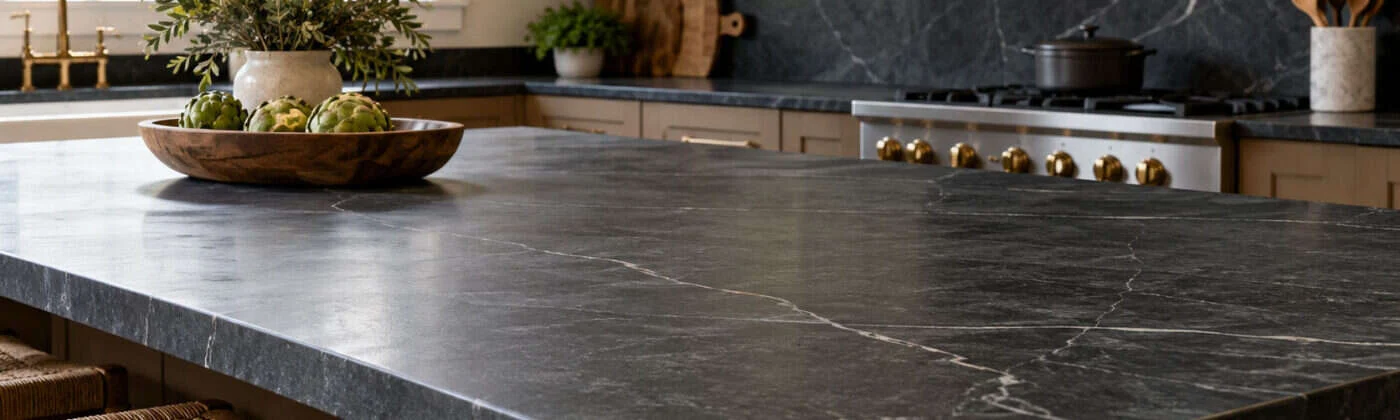
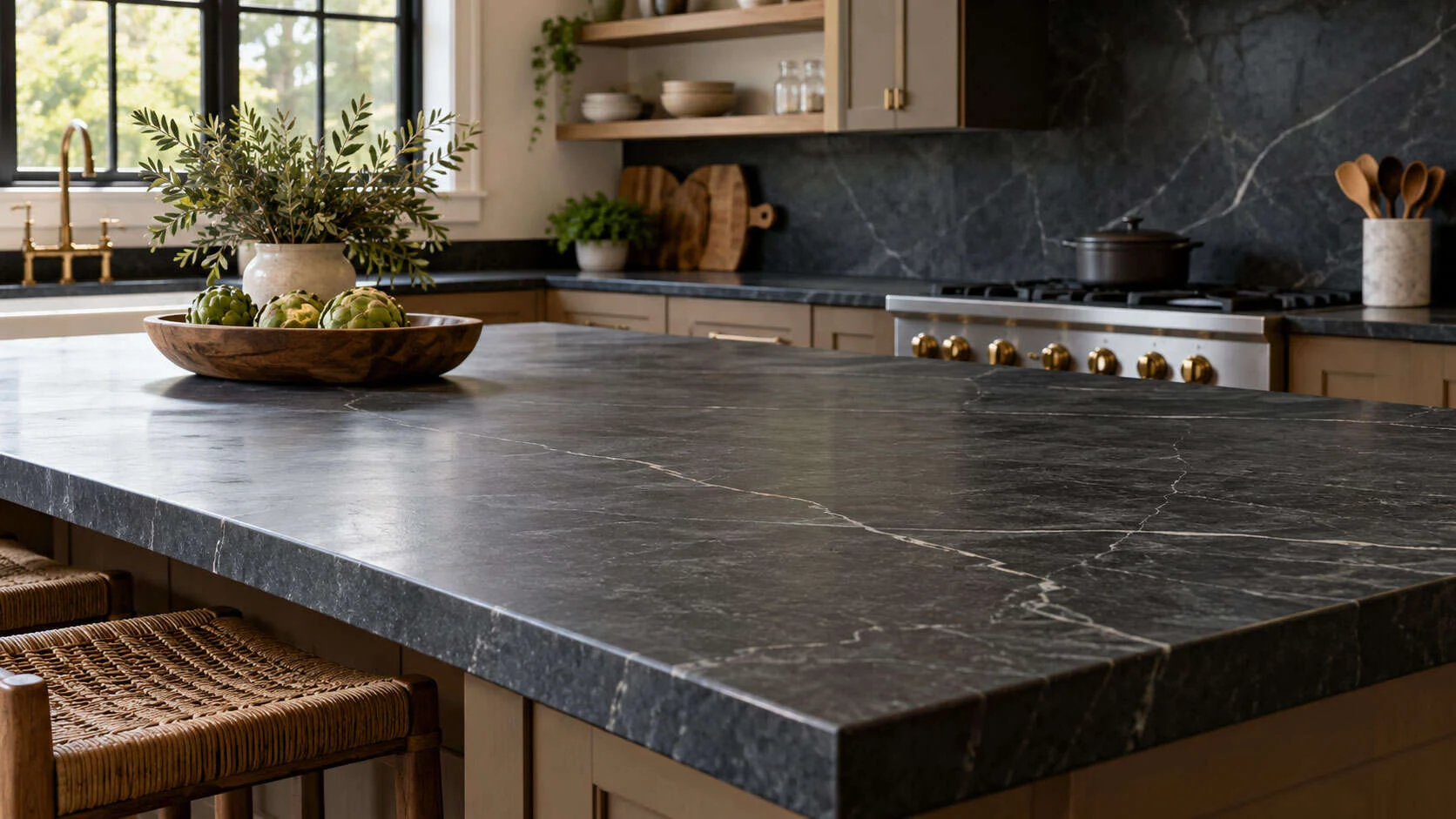
Soapstone has a quiet, soft matte appeal. It is a surface that feels warm under hand and only looks better as it ages. It’s a favorite in farmhouse design and modern-organic kitchens alike. If you’re considering soapstone countertops, here’s an honest rundown.
What is soapstone?
Soapstone is a natural metamorphic stone rich in talc. Metamorphic rock is pre-existing stone that undergoes intense pressure and heat, sometimes with exposure to liquid, that transforms it. It does not become molten. That would be igneous rock.
The metamorphosis that creates soapstone gives it a characteristic soft, silky feel. Architectural grade countertop stone contains less talc than the softer artistic grade. You need that for durability in daily kitchen use. Colors range from light gray to deep charcoal, usually with subtle veining that will deepen when oiled.
The patina
Unlike most natural stones, you do and will want soapstone to evolve. When left alone it gradually lightens and shows wear. When treated with a light oil like mineral oil, it deepens to a rich, near-black tone with pronounced veining. Many owners prefer to oil it periodically at first, and then simply let it change naturally.
The pros
Soapstone is non-porous, so in reality, it never needs sealing and won’t harbor bacteria, which is a genuine advantage in a natural stone. It’s highly heat-resistant, so you can set hot pots directly on it. It resists staining and etching, even from acidic spills like citrus fruits or wines, which is why it’s popular around cooktops and sinks.
The cons
Soapstone is softer than granite and quartzite, so it scratches and nicks. Be choosy about where you want it. Now, that scratching and nicking has a secret cure. Most scratches sand out or blend in with the application of a little mineral oil.
The color palette is limited to grays and blacks, so it’s not the stone for someone wanting a bright white or bold color.
Soapstone vs. granite vs. marble
Granite is harder and comes in far more colors but needs sealing. Marble offers classic white elegance but etches easily. Soapstone trades color variety and hardness for zero sealing, excellent heat and stain resistance, and tactile warmth that the others don’t quite match.
Cost
Soapstone typically lands in a mid-to-premium priced tier. Cost is driven by slab size, thickness, and quality/grade.
Care
Day to day, warm water and mild soap are all soapstone needs. Apply mineral oil if you want to speed up and even out the patina of age and sand out any deep scratches with fine sandpaper.
Is soapstone right for you?
When you want a warm, low-maintenance, heat-proof surface with character that grows over time, soapstone is a standout. Visit Zion Stone Gallery to see soapstone slabs in person.
