
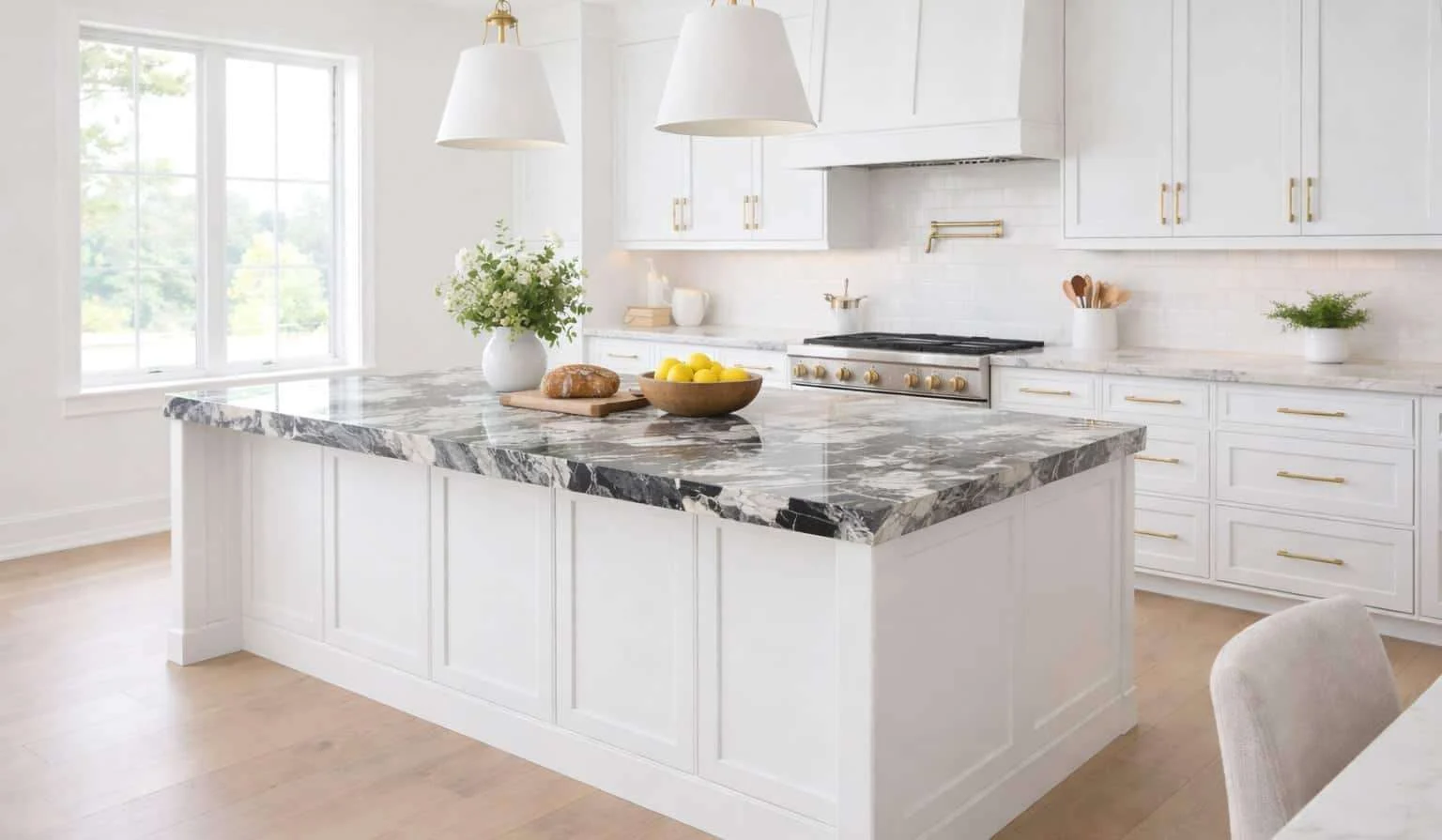
Choosing a natural stone countertop should feel exciting. Instead, most people end up deep in Google comparing marble vs granite vs quartzite vs soapstone until everything starts sounding the same.
They are not the same.
Each stone has a distinct personality, performance profile, and maintenance expectation. There is no universal “best.” There is only the right material for your design goals, lifestyle, and tolerance for imperfection.
Let’s break them down properly.
Marble Countertops
What Marble Does Beautifully
- Iconic veining and movement
- Soft, light-reflective surface
- Timeless appeal in traditional and European-inspired spaces
What You Need to Understand
Marble is softer and more porous than granite or quartzite. It can:
- Etch from acidic substances like lemon juice or wine
- Scratch more easily
- Develop patina over time
- Bathroom vanities
- Lower traffic kitchens
- Formal spaces
- Clients who embrace character and aging
Best Applications
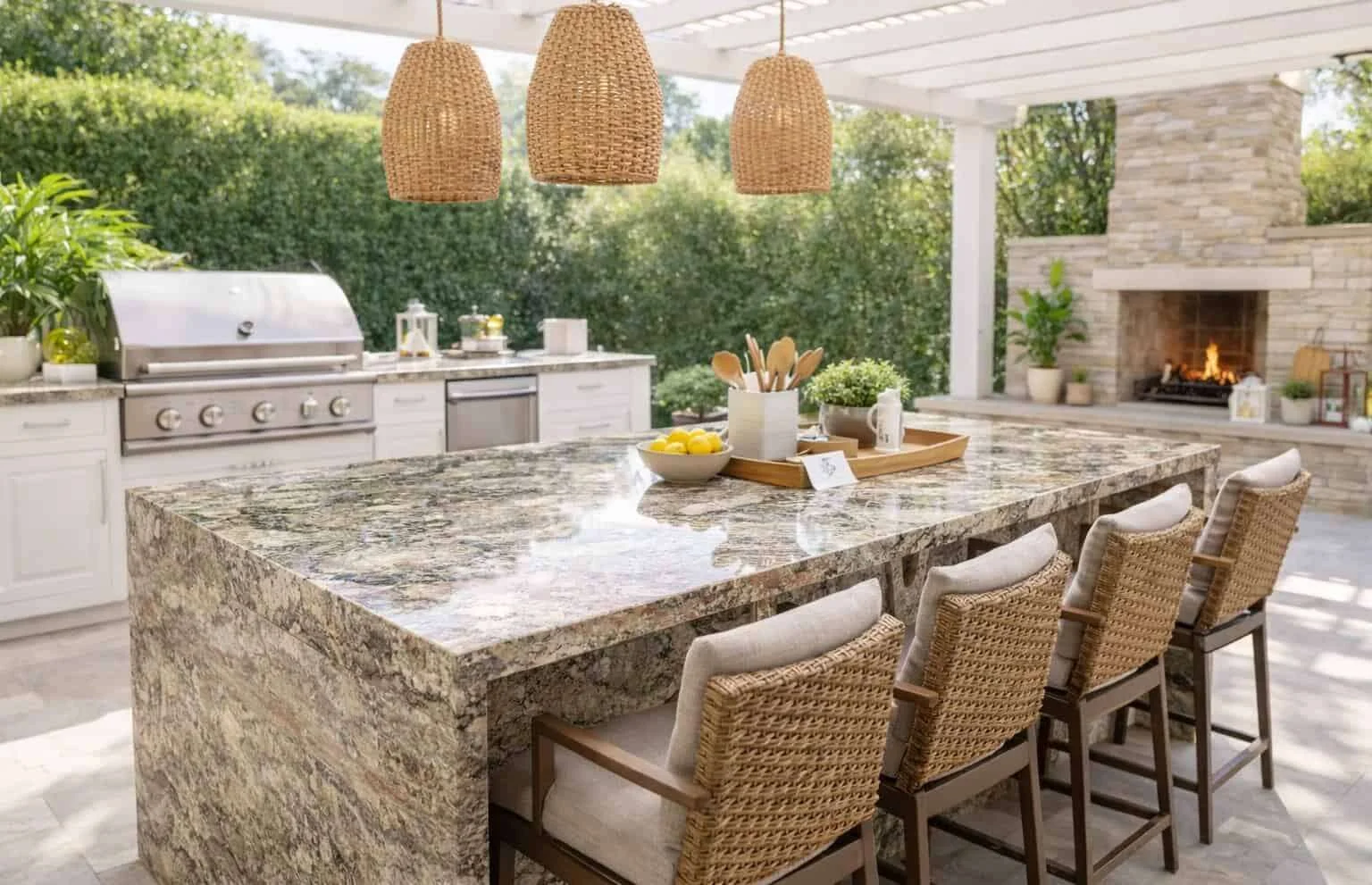
Granite Countertops
What Granite Does Well
- Strong resistance to scratching
- Excellent heat resistance
- Wide range of colors and movement
Maintenance Considerations
- Requires periodic sealing
- Generally resistant to etching
- Low maintenance compared to marble
Best Applications
- High-traffic family kitchens
- Outdoor kitchens
- Clients prioritizing performance
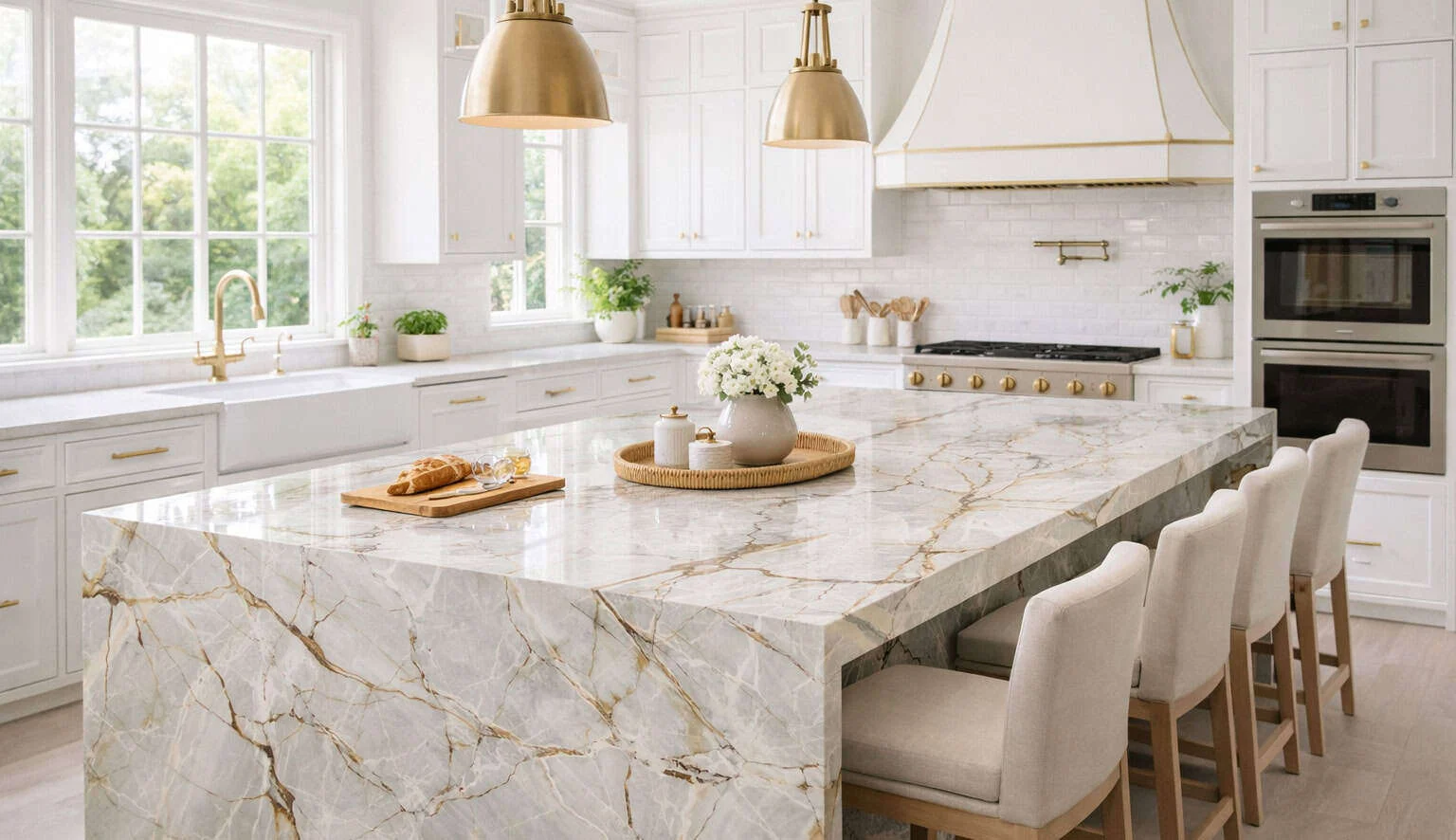
Quartzite Countertops
Why Designers Love Quartzite
- Dramatic, marble-like veining
- High hardness and durability
- Strong resistance to scratching
Important Distinction
True quartzite is not engineered quartz. It is a natural stone.
It can still require sealing, and some varieties are more porous than others, but overall it offers:
- Better etch resistance than marble
- Strong structural integrity
- Ideal balance of beauty and performance
Best Applications
- Statement kitchen islands
- High-use kitchens
- Clients who want marble aesthetics with greater durability
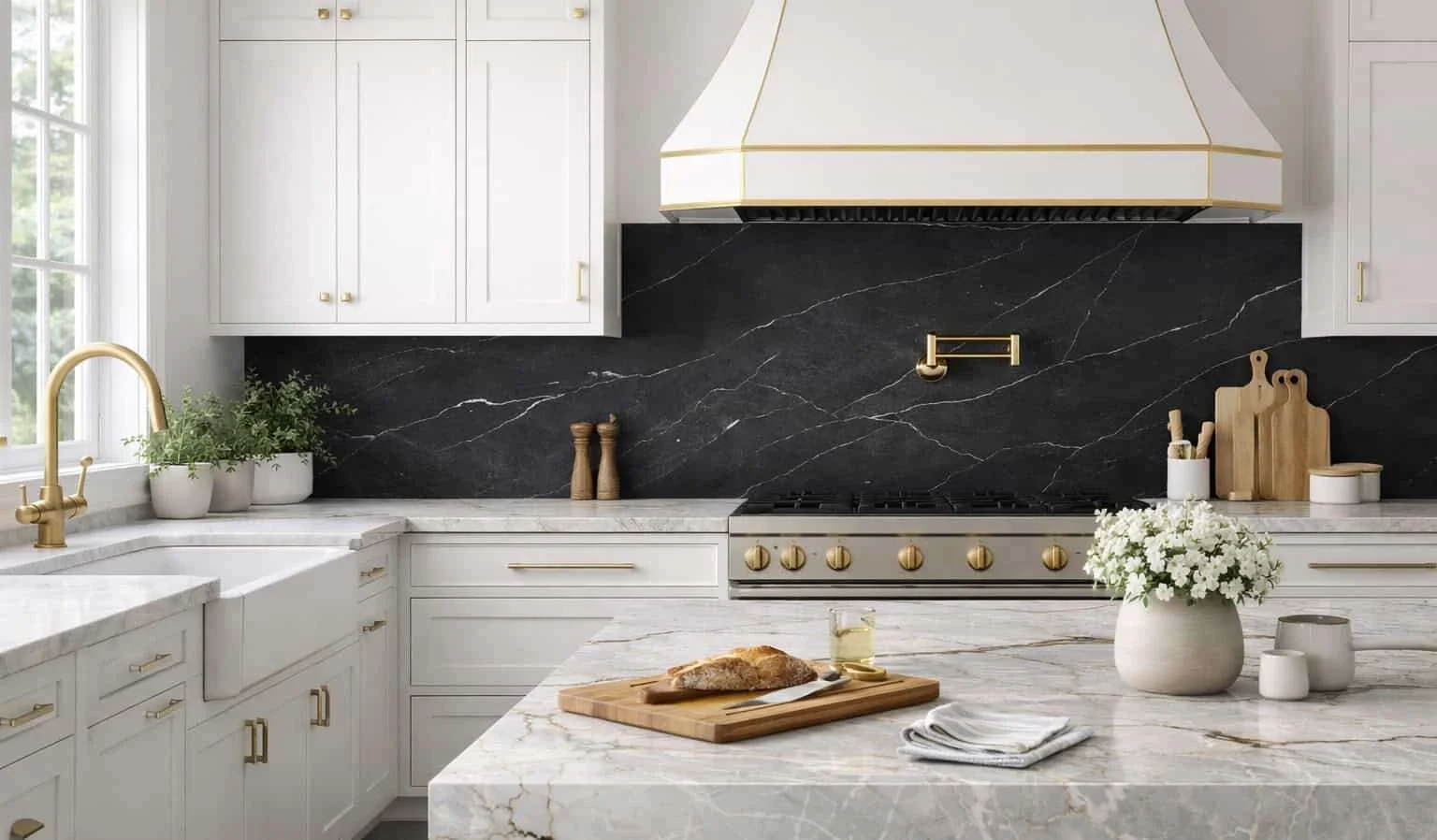
Soapstone Countertops
What Makes Soapstone Unique
- Smooth, matte finish
- Deep charcoal to soft gray coloring
- Naturally non-porous
What to Expect
- Softer surface that can scratch
- Scratches can be sanded or blended
- Develops a natural patina over time
- Often treated with mineral oil to deepen color
Best Applications
- Historic or farmhouse-style homes
- Clients who love an aged, organic look
- Spaces where subtle texture matters more than bold pattern
Side-by-Side Comparison
| Feature | Marble | Granite | Quartzite | Soapstone |
| Hardness | Moderate | High | Very High | Moderate |
| Etch Risk | High | Low | Low to Moderate | Very Low |
| Sealing Required | Yes | Yes | Yes | No |
| Best For | Elegant spaces | High-use kitchens | Statement islands | Organic designs |
How to Choose the Right Stone for Your Project
1. Consider Your Lifestyle
Here is where most decisions actually get made.
- Busy family kitchen with heavy use? Granite or quartzite.
- Entertaining space where beauty is the focus? Marble or quartzite.
- Low maintenance expectations? Granite or soapstone.
2. Define Your Design Direction
- Modern and bold: Quartzite
- Traditional and timeless: Marble
- Earthy and organic: Soapstone
- Versatile and durable: Granite
3. Evaluate Your Tolerance for Maintenance
Some clients love patina. Others want surfaces to look identical ten years later.
If etching will bother you, eliminate marble. If natural aging appeals to you, soapstone may feel rewarding. This is not a technical decision alone. It is emotional.
4. See the Slabs in Person
Photos flatten everything.
Movement, color variation, and surface finish are impossible to fully understand online. Two quartzite slabs can perform similarly but look dramatically different.
At Zion Stone Gallery, selecting natural stone is not a rushed decision. Designers, builders, and homeowners can view full slabs, compare options side by side, and make confident selections based on both performance and aesthetic goals.
Because natural stone is not interchangeable. It is individual. And the right choice is the one that aligns with how you want your space to feel every single day.
