
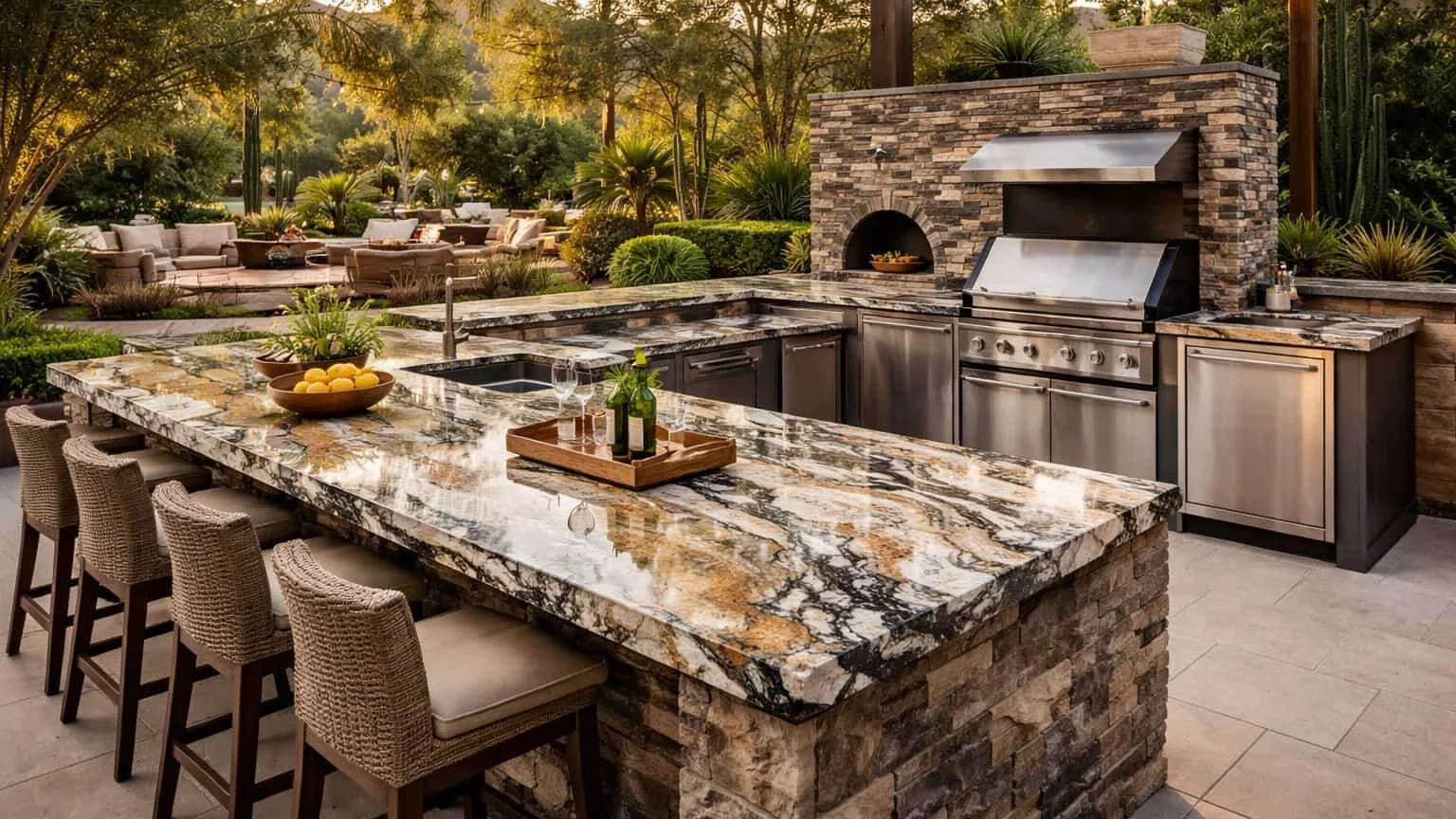
Outdoor kitchens and living spaces have evolved far beyond a grill and a picnic table. Today’s outdoor environments are fully designed extensions of the home, complete with custom cabinetry, fire features, pizza ovens, bars, and integrated seating. As these spaces become more permanent and architectural, stone selection plays a critical role in both performance and longevity.
Choosing the right stone for an outdoor application is not just about aesthetics. Builders and designers must consider climate exposure, heat resistance, maintenance expectations, and how materials will age over time. The wrong surface can lead to fading, cracking, staining, or premature replacement. The right one can last decades with minimal upkeep.
Below are key stone selection considerations to help ensure outdoor kitchens and living spaces perform as beautifully as they look.
Understand the Demands of the Outdoor Environment
Outdoor stone surfaces are exposed to conditions indoor materials never face. Direct sunlight, temperature fluctuations, moisture, wind, and airborne debris all impact long-term performance.
In Southern Utah and similar climates, UV exposure and heat are especially important factors. Materials that perform well indoors may discolor, fade, or degrade outdoors if they are not designed for exterior use. Freeze-thaw cycles, even if infrequent, can also cause cracking or surface failure in porous materials.
Before selecting a stone, confirm that it is suitable for exterior installation and can withstand the specific environmental conditions of the project location.
Prioritize Heat and UV Resistance
Outdoor kitchens often place stone surfaces near grills, smokers, fire features, and pizza ovens. Heat resistance is not optional. Some engineered materials, particularly resin-heavy surfaces, can scorch, warp, or discolor when exposed to high temperatures.
UV resistance is equally critical. Prolonged sun exposure can fade pigments, alter surface appearance, or weaken binding agents over time.
Natural stones like granite and certain quartzites are known for their ability to handle both heat and sunlight. Mineral-based engineered surfaces and sintered stone products also perform well outdoors due to their dense composition and manufacturing process, which uses heat and pressure rather than heavy resin binders.
Evaluate Porosity and Moisture Absorption
Porosity determines how a stone reacts to moisture, spills, and weather exposure. Highly porous stones absorb water, oils, and stains more readily, which can lead to discoloration or surface damage if not properly sealed and maintained.
For outdoor kitchens and living spaces, low-porosity materials are often preferred. These surfaces resist moisture penetration and are easier to maintain over time.
If a more porous stone is selected for aesthetic reasons, proper sealing and a clear maintenance plan should be part of the project scope. Designers and builders should communicate these requirements clearly to homeowners to avoid future issues.
Consider Maintenance Expectations Early
Not all clients want to maintain their outdoor surfaces the same way. Some are comfortable with routine sealing and care, while others expect a surface that performs with minimal intervention.
Stone selection should align with the client’s lifestyle and expectations. Low-maintenance materials reduce long-term costs and callbacks, while higher-maintenance stones may offer a specific aesthetic that justifies the extra care.
Setting realistic expectations early helps protect both the finished project and the client relationship.
Match Stone Selection to the Overall Design Intent
Outdoor living spaces should feel cohesive with the home’s architecture and surrounding landscape. Stone surfaces play a major role in achieving that balance.
Designers should consider color variation, veining, texture, and finish when selecting materials. Natural stone offers one-of-a-kind movement and character, while engineered and mineral surfaces provide consistency and uniformity when required.
Finish also matters. Honed or textured finishes often perform better outdoors than polished surfaces, which can show wear more easily and become slippery when wet.
Plan for Fabrication and Installation Requirements
Outdoor installations require careful planning at the fabrication and installation stage. Stone thickness, edge profiles, expansion allowances, and substrate preparation all affect long-term performance.
Not every material is suitable for every application. Large overhangs, integrated sinks, or cantilevered features may require specific stone properties or reinforcement.
Working with experienced fabricators and suppliers ensures the selected stone can be installed correctly and perform as intended in an exterior environment.
Choose Materials with Proven Outdoor Performance
When in doubt, prioritize materials with a proven track record in outdoor applications. Granite, select quartzites, and mineral-based engineered surfaces are commonly used for outdoor kitchens due to their durability and resistance to environmental stressors.
Sintered stone and mineral surfaces have gained popularity for exterior use because they offer consistent performance, resistance to heat and UV exposure, and a wide range of aesthetic options that mimic natural stone.
Selecting materials specifically designed or tested for outdoor use reduces risk and increases project longevity.
Partner with a Knowledgeable Stone Supplier
The success of an outdoor kitchen or living space often depends on early material guidance. A knowledgeable stone supplier can help builders and designers navigate performance considerations, compare material options, and avoid costly mistakes.
Access to a curated selection of natural and engineered stone surfaces allows design professionals to choose materials that meet both aesthetic and functional requirements.
A strong supplier relationship also streamlines project timelines and supports better outcomes for clients.
Final Thoughts
Outdoor kitchens and living spaces are long-term investments that deserve the same level of material consideration as interior environments. Thoughtful stone selection ensures these spaces remain functional, beautiful, and durable for years to come.
By understanding environmental demands, prioritizing performance, and aligning materials with design intent, builders and designers can create outdoor spaces that elevate the home and stand up to real-world use.
FAQ: Stone Selection for Outdoor Kitchens and Living Spaces
Granite, certain quartzites, and mineral-based engineered surfaces are commonly recommended due to their heat resistance, durability, and outdoor performance.
Some engineered surfaces are suitable for outdoor use, particularly mineral-based and sintered stone products. Traditional resin-heavy quartz is generally not recommended for exterior applications.
It depends on the material. Some natural stones require periodic sealing, while others and certain mineral surfaces require little to no maintenance.
Sun exposure, temperature swings, moisture, and freeze-thaw cycles all impact stone performance. Materials should be selected based on the specific environmental conditions of the project location.
